
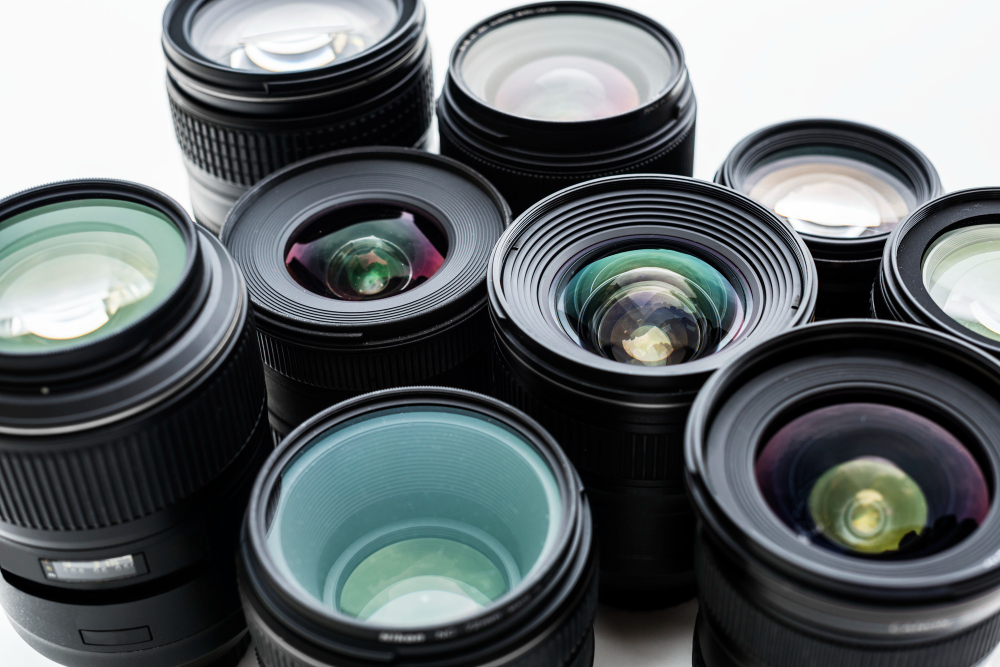
The relationship between lens and camera has always been intimate. But the introduction of AI-driven autofocus, high-resolution sensors, and video-first design is fundamentally changing what lenses need to do — and how manufacturers are designing them.
Corner Sharpness: The New Benchmark
For decades, a lens was considered excellent if it delivered sharp results in the centre of the frame wide open, with acceptable corner performance. The reasoning was practical: photographers composing through a viewfinder naturally placed their subjects centrally, and corners were cropped, de-emphasised, or simply accepted as soft.
High-resolution sensors changed this calculation. At 45 or 61 megapixels, corner softness is visible and distracting even in casual viewing at standard sizes. Landscape photographers cropping wide shots, architecture photographers requiring geometric precision, and commercial photographers delivering to large-format print all require consistent sharpness across the full frame. Modern lens design now treats corner performance as a primary rather than secondary specification.
Focus Breathing and Video
Focus breathing — the change in apparent field of view that occurs when a lens shifts focus distance — was a minor inconvenience in still photography. In video work, it becomes a significant problem: rack focusing between subjects causes the frame to appear to zoom in and out, requiring either careful technique or post-production correction.
The response from manufacturers has been direct. Sony's G Master series, Canon's RF Cinema lenses, and Sigma's Cine line have all been redesigned with focus breathing compensation — optical engineering that maintains consistent field of view across the focus range. This is not a minor refinement. It requires substantially different internal element grouping and adds to lens weight and complexity.
"Designing for minimal focus breathing adds real cost. But for any serious video work, it eliminates an entire category of problem that previously required expensive workarounds."
— Hiroshi Tanaka, Optical Engineer, Sony Professional
AI Autofocus: The Lens as a Partner
Traditional autofocus systems controlled lens motor speed through relatively simple phase or contrast-detection feedback. AI autofocus — subject tracking, eye detection, predictive movement modelling — places dramatically more complex demands on the lens. The motor must respond to predicted rather than current subject position, meaning it receives instructions that ask it to move to where the subject will be, not where it is.
This requires linear stepper motors with extremely precise position control and near-zero response latency. Linear resonant actuators (LRA), which are standard in current high-end lenses, operate differently from traditional micro-motors — they are genuinely designed around the requirements of computational autofocus rather than adapted to it.
Aberration for Algorithms
One counterintuitive development: some manufacturers are now designing lenses with known, predictable aberration characteristics rather than attempting to eliminate them optically. The reasoning is that in-camera computational correction — applied during RAW processing — can neutralise aberrations with mathematical precision, at zero cost to contrast, vignetting, or other optical qualities that optical correction typically trades off.
This allows lenses to be smaller, lighter, and less expensive while delivering corrected output equivalent to a larger, heavier, more complex optical design. Sony's kit lenses and certain Nikon Z compact primes use this approach explicitly. The trade-off is that the RAW file, without correction, looks worse than equivalent optically-corrected designs — which matters if you work with a RAW editor that doesn't apply the manufacturer's correction profiles.
Buying Advice
When evaluating lenses for your system, we'd suggest looking beyond centre sharpness charts — which have been reliably excellent across all current major manufacturers — and focusing on corner performance at your working apertures, focus breathing if you shoot video, and motor type if AI autofocus is central to your work. Our team at Chatabte can arrange in-store tests with your own camera body before purchase.