
The question keeps appearing in our showroom, in photography forums, and in think-pieces across the industry: if AI can now generate a convincing image of anything, what is the point of a camera? It's a fair question. It also misunderstands what most photographers are actually doing, and why.
The Generation Capability Is Real
Let us not dismiss the premise. AI image generation tools in 2026 have crossed a threshold that was theoretical three years ago. A skilled prompt engineer can produce a photorealistic image of a person, a place, a product, or an event that many viewers cannot distinguish from a photograph. This is not a future capability — it exists now, and it is used commercially.
Stock photography has been significantly disrupted. Certain categories of commercial imagery — generic lifestyle, abstract concept, product mockup — are already cheaper to generate than to photograph. This is a real economic shift, and photographers working in those niches have had to adapt.
What AI Cannot Generate
But the disruption has clarified, rather than eliminated, what photography actually provides. The fundamental claim of a photograph — this is what light reflected from a real object, in a real place, at a real moment in time — cannot be replicated by generation. This claim is not a technical property. It is a social contract.
Wedding photography exists because the couple wants evidence of their actual day. News photography exists because readers need to trust that what they see happened. Sports photography documents real athletic achievement. Wildlife photography witnesses real animals in real ecosystems. Portrait photography preserves real people at real points in their lives. In every case, the value is inseparable from the ontological status of the image — its being a record rather than an invention.
"The photograph is not valued because it is beautiful. It is valued because it was there."
— Susan Sontag (paraphrased), On Photography
The Authentic Content Premium
What we are seeing across commercial photography in 2026 is the emergence of what brand strategists are calling an "authenticity premium." As AI-generated imagery becomes ubiquitous, genuine photography — images provably taken by a person with a camera — is acquiring scarcity value it has never previously possessed.
Several major brands have explicitly repositioned their visual identity around "camera-captured" photography as a trust signal. Their reasoning: in an environment saturated with generated imagery, a real photograph communicates something that a generated one cannot, regardless of technical quality. Documentary credibility is becoming a brand asset.
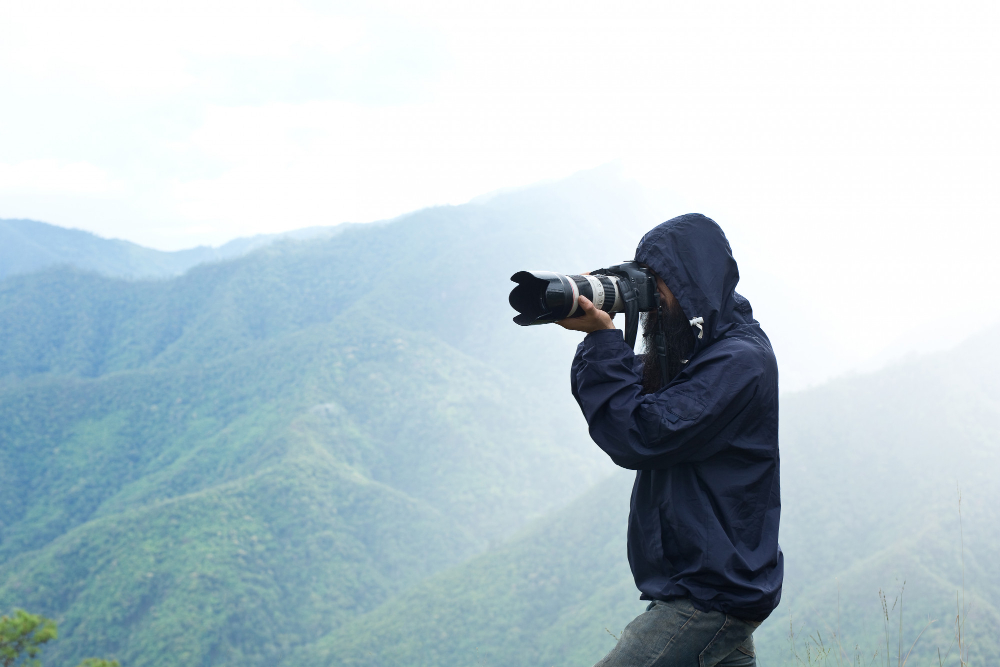
Authentic photography carries implicit documentary value that no amount of technical sophistication in generation can replicate — it was there.
Photography as Practice, Not Just Output
There is a second, more personal reason that camera sales remain robust, and it has nothing to do with professional economics. Photography, for a very large proportion of buyers, is a practice — a way of engaging with the world, paying attention, developing perception. The output is secondary to the act.
No one asks why people still paint when cameras exist, or why people still cook when restaurants do. The value of a practice is not solely in its output. Photography teaches seeing. It creates occasions for presence. It produces objects with personal rather than merely commercial meaning. An AI-generated image of your child's first birthday is not a photograph of your child's first birthday. The difference is everything.
The Trust Problem
Audiences are increasingly aware that any given image may be generated, and this awareness is changing how images function socially. Genuine photographs — especially those with verifiable provenance (camera EXIF data, identifiable location, known photographer) — carry epistemic weight that generated images cannot. This is emerging as a genuine competitive advantage for photographers who can demonstrate authenticity.
Why Camera Sales Are Rising
CIPA data for 2025 showed interchangeable-lens camera unit sales increasing for the third consecutive year. The AI generation boom did not suppress camera purchases — it may have stimulated them. The plausible explanation: as AI imagery becomes ambient, the desire to produce genuinely witnessed images becomes more rather than less compelling. The camera becomes an act of resistance against the synthetically generated visual environment.
At Chatabte, we see this daily. Customers come in not because they're unaware of AI tools, but because they've consciously chosen to document rather than generate. That decision is, if anything, more deliberate than it has ever been.